
Introduction
In modern agriculture, agricultural machinery gearboxes, as the core components for power transmission, directly affect the operational efficiency and lifespan of mechanical equipment. From seeders to combine harvesters, the stable operation of gearboxes is the key to ensuring the farming season and reducing production costs. However, due to factors such as harsh working environments and large load fluctuations, gearbox failures occur frequently, not only leading to a rise in maintenance costs but also possibly delaying agricultural work and causing irreversible losses. Therefore, systematically mastering the methods of fault prevention is not only a “good prescription” for extending the service life of equipment but also an inevitable demand for the sustainable development of agriculture.
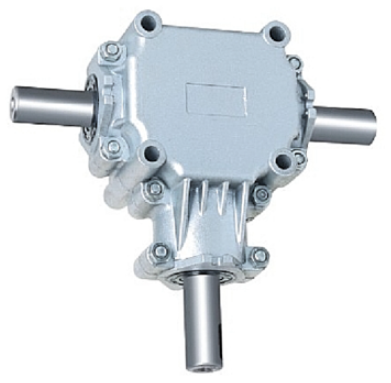
Common Fault Types of Agricultural Machinery Gearboxes
Gear wear and fracture
Gears are the core transmission components of gearboxes. Long-term exposure to alternating loads can easily lead to tooth surface wear, pitting corrosion, and even tooth breakage. For instance, the invasion of hard impurities into the lubrication system can accelerate the scratching of tooth surfaces, while material fatigue may cause sudden fractures.
Bearing failure
Bearings, as key components supporting rotating parts, often suffer from wear and erosion due to insufficient lubrication, installation deviations or overloading, which can cause abnormal noises or even jamming of the gearbox during operation.
Lubrication system problem
The deterioration of lubricating oil, insufficient oil level or clogged oil passage will directly weaken the lubrication effect of gears and bearings, causing a chain of faults such as overheating and sticking.
Aging and leakage of seals
Sealing rings, oil seals and other components are prone to hardening and cracking when exposed to high temperatures and oil corrosion for a long time, which can lead to lubricating oil leakage or the intrusion of external impurities, thus forming a vicious cycle.
Other faults
For instance, overheating of the gearbox (mostly due to lubrication failure or excessive load), abnormal vibration (resulting from poor gear meshing or bearing damage), etc., may all be caused by a single or a combination of factors.

Cause Analysis for Agricultural Machinery Gearboxes
| Category of Fault Causes | Specific Causes | Typical Manifestations & Impacts |
| Design & Manufacturing Defects | 1. Inappropriate material selection (e.g., low-strength alloys used in heavy-load scenarios) | Increased gear tooth wear and higher risk of tooth fracture |
| 2. Heat treatment flaws (e.g., uneven quenching leading to insufficient hardness) | Reduced gear fatigue resistance, prone to pitting or spalling | |
| 3. Poor gearbox structural design (e.g., narrow cooling channels, flawed oil routing) | Impaired lubricant circulation, localized overheating; poor sealing performance | |
| Improper Operation & Use | 1. Overloading (e.g., tractors operating at full power continuously) | Excessive gear meshing force, reduced bearing clearance, accelerated wear |
| 2. Frequent abrupt acceleration/deceleration or non-standard gear shifting | Increased impact loads on gears, leading to root crack propagation | |
| 3. Prolonged operation in harsh conditions (e.g., muddy fields, steep slopes) | Enhanced gearbox vibration, loosened seals, higher risk of contaminant ingress | |
| Inadequate Maintenance | 1. Irregular lubricant replacement or incorrect viscosity selection | Lubricant film failure, direct metal-to-metal contact, causing scuffing or seizure |
| 2. Uncleaned oil passages (e.g., accumulation of metal debris or straw fibers) | Reduced lubricant flow, exacerbated component wear | |
| 3. Delayed replacement of aged seals (e.g., hardened/cracked rubber oil seals) | Lubricant leakage leading to low oil levels; accelerated corrosion from external dust | |
| 4. Lack of routine inspections (e.g., unmonitored gear meshing clearance or bearing play) | Undetected minor faults (e.g., slight wear) escalating into severe failures | |
| Environmental Factors | 1. Extreme temperatures (e.g., lubricant viscosity surge in northern winter cold) | Reduced lubricant fluidity, increased startup resistance, and wear |
| 2. High-temperature environments (e.g., prolonged summer operation) | Lubricant oxidation and sludge formation, clogging oil passages | |
| 3. Dust and straw debris ingress (e.g., absence of air filters) | Abrasive particles embedding in gear teeth or bearing races, causing abrasive wear | |
| 4. Humid or corrosive environments (e.g., salt spray in coastal regions) | Gearbox housing rusting, degraded seal performance, shortened service life |
Multi-dimensional Prevention Strategy: From Source to Terminal
Optimize design and material selection
Gears are made of high-strength alloy steel (such as 20CrMnTi), and the surface hardness is enhanced through carburizing and quenching processes. Improve the box structure, add heat dissipation fins and dust covers to enhance environmental adaptability.
Standardize the operation process
Carry out skills training for operators, emphasizing the avoidance of dangerous behaviors such as overloading and sudden stops. Develop a standardized operation manual to clearly define the load limits under different working conditions.
Build a preventive maintenance system
Lubrication management: Select lubricating oil with appropriate viscosity based on working conditions (such as CF-4 grade diesel engine oil), replace it every 500 hours, and regularly test the content of metal particles in the oil.
Regular inspection: Before each season’s operation, check the gear meshing clearance, bearing clearance and the condition of the seals, and tighten any loose bolts.
Status monitoring: Install vibration sensors and temperature probes to monitor the operating parameters of the gearbox in real time and set threshold alarms.
Enhance environmental adaptability
Fluororubber sealing rings are adopted to replace ordinary rubber parts, enhancing high-temperature resistance and oil resistance. Install air filters in dusty areas to reduce the intrusion of impurities.
Introduce intelligent monitoring technology
By integrating sensor data through the Internet of Things platform and using machine learning algorithms to predict fault trends, the transformation from “passive maintenance” to “active maintenance” is achieved.

Case Analysis: Learning from Failures
In 2022, a combine harvester on a certain farm experienced a sudden gearbox breakage during operation, causing the transmission shaft to fall off and resulting in a direct loss of over 50,000 yuan. After investigation, the cause of the malfunction is:
Design defect: The gearbox housing is made of cast aluminum alloy, which has insufficient strength.
Improper operation: To catch up with the farming season, agricultural machinery operators have been working beyond their capacity for a long time.
Maintenance deficiency: The lubricating oil was not replaced as required, resulting in the tooth surface sticking.
Improvement measures: Replace the high-strength cast iron box body, install load monitoring devices, and establish a “mandatory maintenance every 200 hours” system. After implementation, the incidence of similar faults decreased by 80%.
Experience summary: Fault prevention requires the collaboration of design, operation and maintenance. A single point of improvement is difficult to solve the problem completely.