
Merchandise Description
Solution Description
Aluminum forging parts
Personalized product drawings are recognized
OEM or ODM orders are welcome
Materials: Aluminum 6061, 6063, 2017 and so on
Procedure: forging, machining
Push:400ton-2500ton
End: self finish, anodized complete, powder coated finisih.
FAQ:
FAQ:
one. Are you a legitimate manufacturer?Indeed, all merchandise confirmed in our web site are developed in our ISO9001:2015 licensed manufacturing facility We are also a firm registered by China Customs with the right to export and import.
two. I want to keep our design and style in self-assurance can we indication NDA?Sure, to shield customers’ revenue is our compulsory accountability, signed NDA would be legitimate to equally of us..
three. What need to I provide to get your quotation?Remember to provide us your comprehensive data for the solution, such as drawings with 2d/3D by software Pro/E, Auto CAD, SolidWorks, UG and so on as effectively as materials, surface treatment, amount, bundle. Any unique demands need to be highlighted specially for tolerance.
four.How extended does it get to acquire samples?
twenty doing work times,the lead time is the basic generation period and does not incorporate the transportation time.
we can supply totally free samples with significantly less amount,but consumers want to shell out transport value.
5.How long is the production lead time?
Mass Creation:30-forty five doing work times soon after sample acceptance by yours.The guide time is the common generation period without the transportation time.
We could make some unique creation arrangement successfully if consumer has urgent need to have.
six.How prolonged does it just take to ship items from China by sea?
It takes about 5 months to European ports additionally 1 week customs clearance, so you can get the container inside 6 to 7 weeks.It takes about 2 weeks to east coastline and 3 weeks to west coast US ports.All sea merchandise are shipped from HangZhou Port.
7.How prolonged does it get to ship goods from China by air?
It requires about 7 days to all main destinations.
eight.What are the payment conditions?
Payment terms are negotiable and will boost for lengthy time period consumers.Throughout the first levels, we request 50% of tooling payment in advance with the balance payable on acceptance of samples.Creation orders can be negotiable.We desire thirty% deposit and the stability by T/T just before sails.But often T/T15 days after sails would also acceptable.
three.New product advancement process
Got tooling purchase and sample purchase with 50% deposit—Maintain a meeting with the relation dept.To make sure the building plan—Style mould, fixture and gauge and producing them in our manufacturing unit—mould.fixture and gauge creating—producing samples—accredited from customer-acquiring substance-forging-heat treatment-shot blasting-machining-Inspection-bundle—delievry
9.Which countries do you export to?
Now largely export to U.S.A, Germany, France, Italy, British isles, Brazil, Swedish, Japan, Korea, Middle east of Asia, Thailand and so on.
ten.Can we check out the factory to carry out an audit?
Of course, you are welcome to go to our factory.
11.How to handle the complains?
–If occur any grievances after shipping,you should just display us pictures and element compliants details, we will examine with the production department and QC section Quickly and give you very best resolving remedy which agreed by the two of us,furthermore we will bear all the cost (such as transport expense).
All elements are custom made produced according to customer’s drawings or samples.If you have any elements to be made, make sure you feel totally free to ship your kind drawings/samples to us.Specialized drawings such as material mark, Product bodyweight, Acquire amount.The complete information will assist us speedily calculate the correct and reasonable cost for you.
| 1. Product Application Fields |
| Construction Machinery Agriculture Machinery Mining Equipment High-Speed Rail Automobile Industry Petrochemical Energy Shipbuilding General Machinery |
| 2. Research and Development |
| CAD Software 3D Solid Modeling DEFORM Simulation Software |
| 3. Material |
| Carbon Steel Alloy Steel Stainless Steel Aluminum |
| 4. Heating Equipment |
| Electric Intermediate Frequency Furnace |
###
| 5. Forging Equipment |
| 2500Ton Double Disc Friction Press 1600Ton Double Disc Friction Press 1000Ton Double Disc Friction Press 630Ton Double Disc Friction Press 400Ton Double Disc Friction Press Sawing Machine Shot Blasting Machine Air Hammer Punch |
| 6. Forging Weight Range |
| 0.05kg-100kg |
| 7. Heat Treatment Equipment |
| Electric heating furnaces with precise computerized temperature control to achieve desired hardness and mechanical properties. Water/Oil/Polymer quenching pool with mechanical Propeller agitation. Induction/Flame hardening equipment. |
| 8. Machining Equipment |
| CNC Center CNC Milling Machine CNC Drilling Machine CNC Lathe Grinding Machine Wire Cutting Machine Electric Pulse Machine EDM |
###
| 9.Inspection Equipment |
| Direct-Reading Spectrometer Hydraulic Universal Testing Machine Rockwell Hardness Tester Brinell Hardness Tester Vickers Hardness Tester Metallographic Analyzer Magnetic Particle Tester Ultrasonic Tester CMM Infrared Thermometer |
| 10.Certification of Quality Management System |
| ISO9001:2008 ISO/TS16949 |
| 1. Product Application Fields |
| Construction Machinery Agriculture Machinery Mining Equipment High-Speed Rail Automobile Industry Petrochemical Energy Shipbuilding General Machinery |
| 2. Research and Development |
| CAD Software 3D Solid Modeling DEFORM Simulation Software |
| 3. Material |
| Carbon Steel Alloy Steel Stainless Steel Aluminum |
| 4. Heating Equipment |
| Electric Intermediate Frequency Furnace |
###
| 5. Forging Equipment |
| 2500Ton Double Disc Friction Press 1600Ton Double Disc Friction Press 1000Ton Double Disc Friction Press 630Ton Double Disc Friction Press 400Ton Double Disc Friction Press Sawing Machine Shot Blasting Machine Air Hammer Punch |
| 6. Forging Weight Range |
| 0.05kg-100kg |
| 7. Heat Treatment Equipment |
| Electric heating furnaces with precise computerized temperature control to achieve desired hardness and mechanical properties. Water/Oil/Polymer quenching pool with mechanical Propeller agitation. Induction/Flame hardening equipment. |
| 8. Machining Equipment |
| CNC Center CNC Milling Machine CNC Drilling Machine CNC Lathe Grinding Machine Wire Cutting Machine Electric Pulse Machine EDM |
###
| 9.Inspection Equipment |
| Direct-Reading Spectrometer Hydraulic Universal Testing Machine Rockwell Hardness Tester Brinell Hardness Tester Vickers Hardness Tester Metallographic Analyzer Magnetic Particle Tester Ultrasonic Tester CMM Infrared Thermometer |
| 10.Certification of Quality Management System |
| ISO9001:2008 ISO/TS16949 |
Types of Screw Shafts
Screw shafts come in various types and sizes. These types include fully threaded, Lead, and Acme screws. Let’s explore these types in more detail. What type of screw shaft do you need? Which one is the best choice for your project? Here are some tips to choose the right screw:
Machined screw shaft
The screw shaft is a basic piece of machinery, but it can be further customized depending on the needs of the customer. Its features include high-precision threads and ridges. Machined screw shafts are generally manufactured using high-precision CNC machines or lathes. The types of screw shafts available vary in shape, size, and material. Different materials are suitable for different applications. This article will provide you with some examples of different types of screw shafts.
Ball screws are used for a variety of applications, including mounting machines, liquid crystal devices, measuring devices, and food and medical equipment. Various shapes are available, including miniature ball screws and nut brackets. They are also available without keyway. These components form a high-accuracy feed mechanism. Machined screw shafts are also available with various types of threaded ends for ease of assembly. The screw shaft is an integral part of linear motion systems.
When you need a machined screw shaft, you need to know the size of the threads. For smaller machine screws, you will need a mating part. For smaller screw sizes, the numbers will be denominated as industry Numeric Sizes. These denominations are not metric, but rather in mm, and they may not have a threads-per-inch designation. Similarly, larger machine screws will usually have threads that have a higher pitch than those with a lower pitch.
Another important feature of machine screws is that they have a thread on the entire shaft, unlike their normal counterparts. These machine screws have finer threads and are intended to be screwed into existing tapped holes using a nut. This means that these screws are generally stronger than other fasteners. They are usually used to hold together electronic components, industrial equipment, and engines. In addition to this, machine screws are usually made of a variety of materials.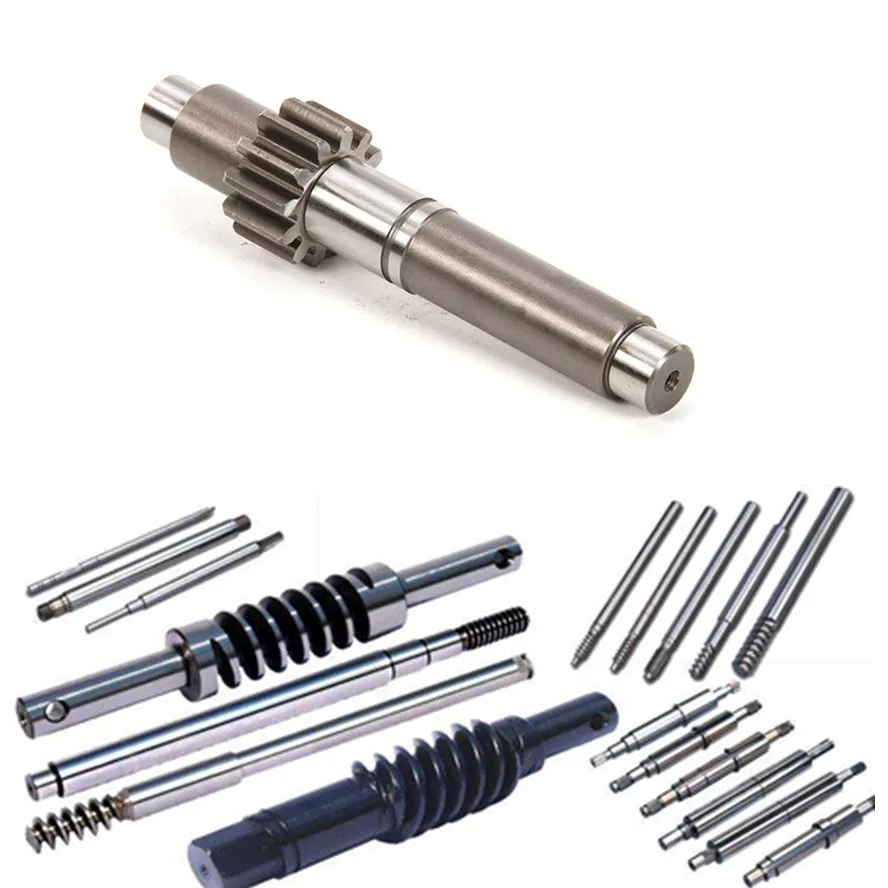
Acme screw
An Acme screw is the most common type of threaded shaft available. It is available in a variety of materials including stainless steel and carbon steel. In many applications, it is used for large plates in crushing processes. ACME screws are self-locking and are ideal for applications requiring high clamping force and low friction. They also feature a variety of standard thread forms, including knurling and rolled worms.
Acme screws are available in a wide range of sizes, from 1/8″ to 6″. The diameter is measured from the outside of the screw to the bottom of the thread. The pitch is equal to the lead in a single start screw. The lead is equal to the pitch plus the number of starts. A screw of either type has a standard pitch and a lead. Acme screws are manufactured to be accurate and durable. They are also widely available in a wide range of materials and can be customized to fit your needs.
Another type of Acme screw is the ball screw. These have no back drive and are widely used in many applications. Aside from being lightweight, they are also able to move at faster speeds. A ball screw is similar to an Acme screw, but has a different shape. A ball screw is usually longer than an Acme screw. The ball screw is used for applications that require high linear speeds. An Acme screw is a common choice for many industries.
There are many factors that affect the speed and resolution of linear motion systems. For example, the nut position and the distance the screw travels can all affect the resolution. The total length of travel, the speed, and the duty cycle are all important. The lead size will affect the maximum linear speed and force output. If the screw is long, the greater the lead size, the higher the resolution. If the lead length is short, this may not be the most efficient option.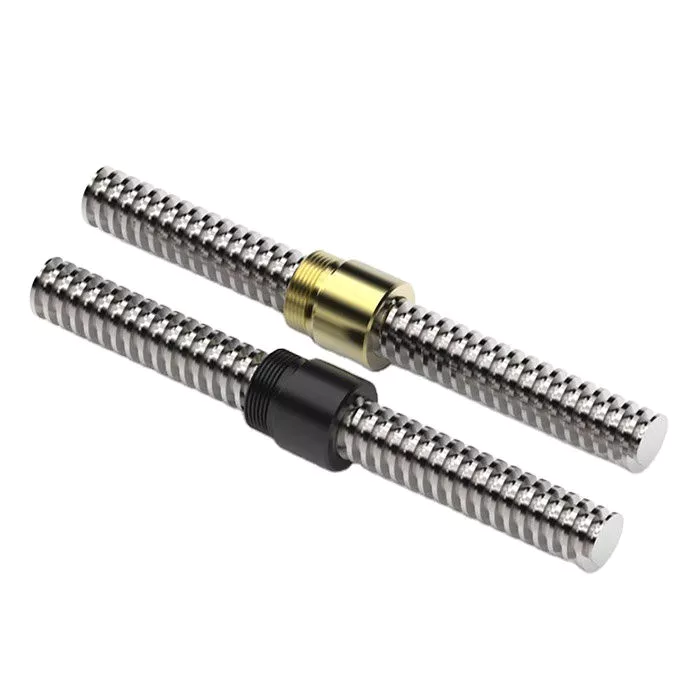
Lead screw
A lead screw is a threaded mechanical device. A lead screw consists of a cylindrical shaft, which includes a shallow thread portion and a tightly wound spring wire. This spring wire forms smooth, hard-spaced thread convolutions and provides wear-resistant engagement with the nut member. The wire’s leading and trailing ends are anchored to the shaft by means appropriate to the shaft’s composition. The screw is preferably made of stainless steel.
When selecting a lead screw, one should first determine its critical speed. The critical speed is the maximum rotations per minute based on the natural frequency of the screw. Excessive backlash will damage the lead screw. The maximum number of revolutions per minute depends on the screw’s minor diameter, length, assembly alignment, and end fixity. Ideally, the critical speed is 80% of its evaluated critical speed. A critical speed is not exceeded because excessive backlash would damage the lead screw and may be detrimental to the screw’s performance.
The PV curve defines the safe operating limits of a lead screw. This relationship describes the inverse relationship between contact surface pressure and sliding velocity. As the PV value increases, a lower rotation speed is required for heavier axial loads. Moreover, PV is affected by material and lubrication conditions. Besides, end fixity, which refers to the way the lead screw is supported, also affects its critical speed. Fixed-fixed and free end fixity are both possible.
Lead screws are widely used in industries and everyday appliances. In fact, they are used in robotics, lifting equipment, and industrial machinery. High-precision lead screws are widely used in the fields of engraving, fluid handling, data storage, and rapid prototyping. Moreover, they are also used in 3D printing and rapid prototyping. Lastly, lead screws are used in a wide range of applications, from measuring to assembly.
Fully threaded screw
A fully threaded screw shaft can be found in many applications. Threading is an important feature of screw systems and components. Screws with threaded shafts are often used to fix pieces of machinery together. Having fully threaded screw shafts ensures that screws can be installed without removing the nut or shaft. There are two major types of screw threads: coarse and fine. When it comes to coarse threads, UTS is the most common type, followed by BSP.
In the 1840s, a British engineer named Joseph Whitworth created a design that was widely used for screw threads. This design later became the British Standard Whitworth. This standard was used for screw threads in the United States during the 1840s and 1860s. But as screw threads evolved and international standards were established, this system remained largely unaltered. A new design proposed in 1864 by William Sellers improved upon Whitworth’s screw threads and simplified the pitch and surface finish.
Another reason for using fully threaded screws is their ability to reduce heat. When screw shafts are partially threaded, the bone grows up to the screw shaft and causes the cavity to be too narrow to remove it. Consequently, the screw is not capable of backing out. Therefore, fully threaded screws are the preferred choice for inter-fragmentary compression in children’s fractures. However, surgeons should know the potential complication when removing metalwork.
The full thread depth of a fully threaded screw is the distance at which a male thread can freely thread into the shaft. This dimension is typically one millimeter shy of the total depth of the drilled hole. This provides space for tap lead and chips. The full-thread depth also makes fully threaded screws ideal for axially-loaded connections. It is also suitable for retrofitting applications. For example, fully threaded screws are commonly used to connect two elements.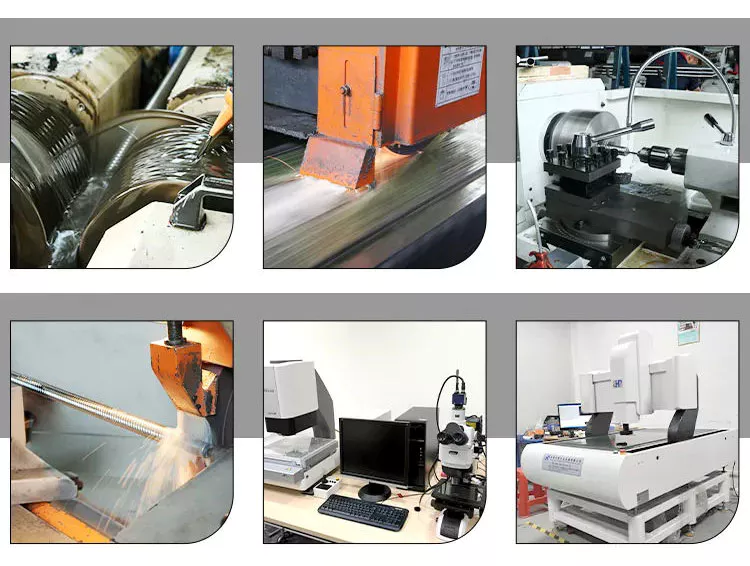
Ball screw
The basic static load rating of a ball screw is determined by the product of the maximum axial static load and the safety factor “s0”. This factor is determined by past experience in similar applications and should be selected according to the design requirements of the application. The basic static load rating is a good guideline for selecting a ball screw. There are several advantages to using a ball screw for a particular application. The following are some of the most common factors to consider when selecting a ball screw.
The critical speed limit of a ball screw is dependent on several factors. First of all, the critical speed depends on the mass, length and diameter of the shaft. Second, the deflection of the shaft and the type of end bearings determine the critical speed. Finally, the unsupported length is determined by the distance between the ball nut and end screw, which is also the distance between bearings. Generally, a ball screw with a diameter greater than 1.2 mm has a critical speed limit of 200 rpm.
The first step in manufacturing a high-quality ball screw is the choice of the right steel. While the steel used for manufacturing a ball screw has many advantages, its inherent quality is often compromised by microscopic inclusions. These microscopic inclusions may eventually lead to crack propagation, surface fatigue, and other problems. Fortunately, the technology used in steel production has advanced, making it possible to reduce the inclusion size to a minimum. However, higher-quality steels can be expensive. The best material for a ball screw is vacuum-degassed pure alloy steel.
The lead of a ball screw shaft is also an important factor to consider. The lead is the linear distance between the ball and the screw shaft. The lead can increase the amount of space between the balls and the screws. In turn, the lead increases the speed of a screw. If the lead of a ball screw is increased, it may increase its accuracy. If not, the lead of a ball screw can be improved through preloading, lubrication, and better mounting accuracy.